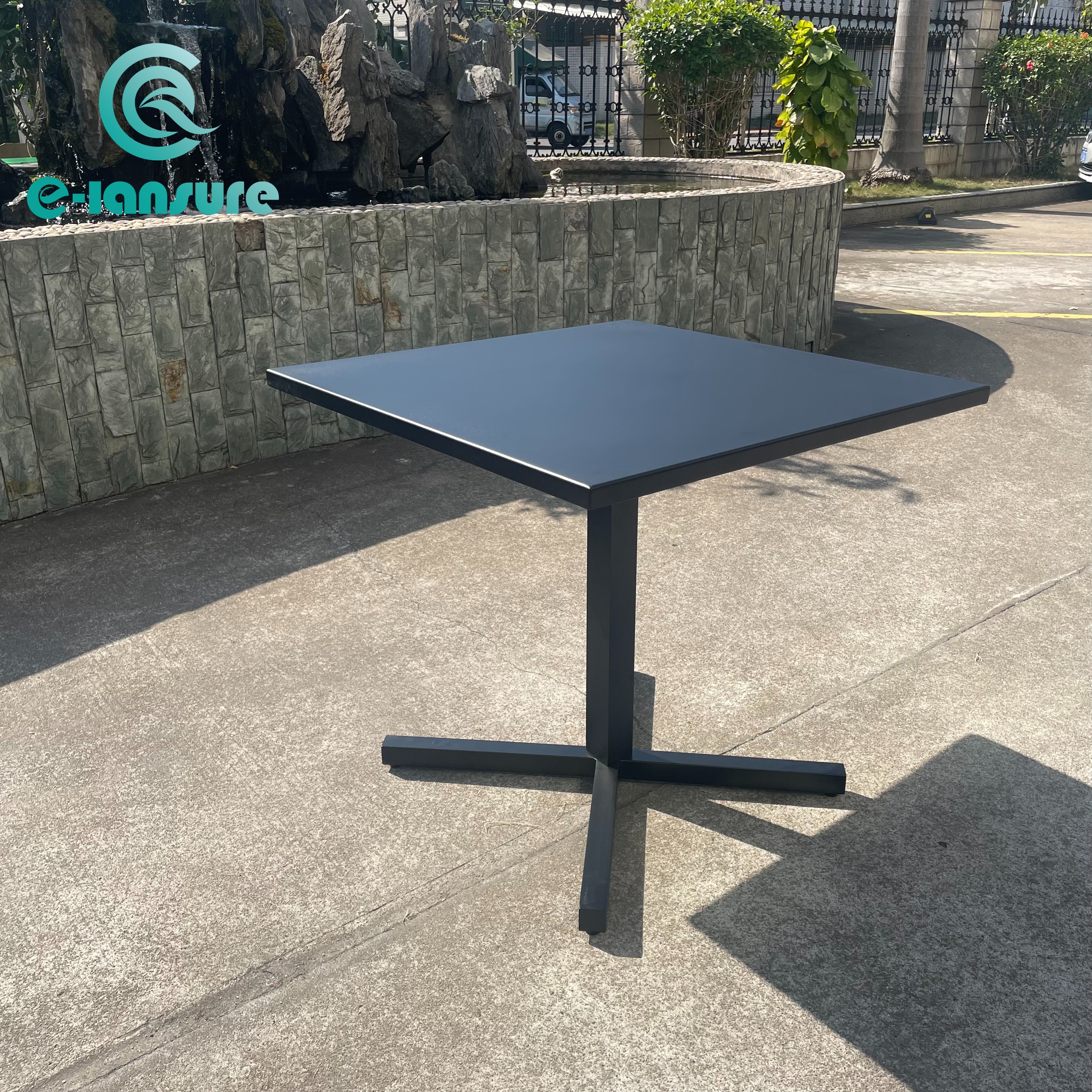
Outdoor dining spaces dramatically increase revenue for hospitality venues. However, this profit potential often clashes with daily logistical friction. Setup, teardown, and overnight security require significant manual labor. Restaurant operators face a constant dilemma. They need scalable seating capacity to maximize peak hours. Yet, they struggle with strict limitations on storage space. Municipal sidewalk regulations and staff labor constraints add further pressure. Can a folding outdoor table meet the rigorous demands of daily commercial use? Will it compromise the guest experience, brand aesthetics, or safety? Viability depends entirely on choosing commercial-grade engineering over residential-grade compromises. You must evaluate durability, storage efficiency, and safety mechanisms. This guide breaks down the exact hardware specifications, material requirements, and spatial economics needed to make the right purchasing decision for your venue.
Commercial Viability: A folding outdoor table is highly suitable for restaurants only when specified for commercial use; residential or standard catering tables introduce unacceptable liability and aesthetic degradation.
Operational Efficiency: The primary ROI of folding outdoor furniture lies in reduced labor costs during daily setup/teardown, enhanced mobility via roll-away designs, and the minimization of required off-hours storage footprint.
Material and Mechanism Imperatives: Procurement must prioritize rust-proof hardware, UV-resistant surfaces, and heavy-duty locking mechanisms to withstand high-turnover environments and extreme weather.
The Business Case for Folding Outdoor Furniture in Hospitality
Maximizing Seasonal Footprint and Revenue
Flexible seating allows restaurants to dynamically scale capacity. You can adjust layouts based on immediate weather conditions. Time of day and seasonal demand dictate your seating needs. Operators do not need to commit to permanent fixtures. A sunny weekend might require maximum patio capacity. A sudden afternoon downpour requires pulling everything indoors swiftly. Folding tables give you this immediate adaptability. You capture peak revenue without permanent spatial commitments. Staff can deploy an extra ten tables in minutes when a waitlist forms. This agility directly translates to increased daily covers and higher profitability. When a patio sits empty during a slow Tuesday lunch, you can strike half the tables to make the space feel full and intimate. When Friday night hits, you roll out the entire inventory to capture every possible walk-in.
Overcoming Nightly Storage and Security Constraints
Spatial economics heavily favor folding designs. Consider the square footage required to store patio equipment. Storing 20 folded tables requires a fraction of the space. Rigid tables consume massive amounts of valuable back-of-house real estate. Stackable alternatives often become dangerously high and unstable, creating workplace hazards for your closing staff. Many municipalities enforce strict sidewalk regulations. They require operators to clear public walkways completely post-service. Folding tables allow staff to meet these compliance rules quickly. You avoid municipal fines and secure your assets indoors overnight. A compact nesting profile means you can store an entire patio setup in a single service hallway or small storage closet. You no longer have to sacrifice dry storage or office space just to keep your patio furniture secure from overnight theft or vandalism.
Adapting to Event and Private Dining Needs
Folding mechanisms allow operators to quickly reconfigure patios. You can host private events or large parties seamlessly. Socially distanced layouts become easy to implement on the fly. Rigid furniture limits your floor plan flexibility. A modular approach lets you push tables together for banquets. You can separate them for intimate two-top dining. This adaptability directly increases your booking capabilities for diverse events. When a corporate group books a patio buyout, your staff can strike the standard layout and set up long communal dining rows in under an hour. Once the event concludes, returning the patio to its standard configuration takes minimal effort. You never have to turn down a large party booking because your furniture is too heavy or awkwardly shaped to accommodate their requested floor plan.
Versatility for Buffets, Holidays, and Off-Site Events
Quality restaurant outdoor furniture serves multiple operational purposes. These tables function perfectly as temporary buffet stations. High-volume holiday gatherings often require extra serving surfaces. You can also deploy them for off-site catering events. Food festivals and pop-up market stalls require highly portable setups. A commercial folding table provides a stable, professional surface anywhere. You maximize asset utilization across different revenue streams. Instead of renting cheap tables for a catering gig, you utilize your existing, branded inventory. Your off-site presentation matches the quality of your in-house dining experience. Staff can load these tables into standard cargo vans without needing specialized moving trucks or lift gates.
Commercial vs. Residential: Defining the Standard
Structural Integrity and Weight Capacity
Load-bearing requirements differ vastly between commercial and residential settings. A commercial outdoor dining table supports heavy plating and glassware. It must withstand leaning guests and aggressive commercial bussing. Standard residential camping tables fail under this daily stress. Patio tables meant for home use wobble and buckle. Commercial frames use thicker gauge metals and reinforced joints. They handle the dynamic weight shifts of a busy restaurant environment. When a 200-pound guest leans on the edge of a commercial table to stand up, the center of gravity remains stable. Residential tables will tip or collapse under the same pressure, spilling drinks and ruining meals. The internal geometry of a commercial frame distributes weight evenly across the base, preventing the tabletop from bowing over time.
Hardware Durability: Hinges, Locks, and Fasteners
Folding mechanisms require specific technical standards. You must prioritize marine-grade stainless steel or solid brass components. Cheap steel hardware will quickly rust and seize. Structural failure during service poses a massive risk. Commercial hinges feature heavy-duty rivets and reinforced pivot points. They resist the wear and tear of daily folding cycles. A residential table might be folded twice a year. A restaurant table is folded 365 times a year. The hardware must reflect this extreme usage difference. Look for self-lubricating bronze bushings inside the hinge assemblies. These small details prevent the metal-on-metal grinding that eventually destroys standard folding mechanisms. The locking pins must be spring-loaded steel, not cheap plastic friction clips that snap off in cold weather.
Warranty and Liability Considerations
Using non-commercial furniture in a business setting carries severe legal implications. Insurance claims may be denied if residential furniture collapses and injures a guest. You must secure commercial warranties that cover high-frequency public use. Manufacturers explicitly state if a product is rated for hospitality environments. Protect your guests and your business by verifying these certifications before purchasing. A voided warranty leaves you entirely responsible for replacement costs and potential medical liabilities. Commercial warranties typically require proof of proper maintenance, but they guarantee the structural frame against catastrophic failure. Residential warranties contain clauses that immediately void all coverage the moment the product is placed on a restaurant patio.
Feature
Commercial-Grade Folding Table
Residential-Grade Folding Table
Weight Capacity
300+ lbs, dynamic load tested
50-100 lbs, static load only
Hardware Components
Marine-grade stainless steel, rust-proof
Standard steel, highly prone to rust
Locking Mechanism
Heavy-duty latch or steel pin lock
Friction fit or lightweight plastic clip
Frame Thickness
Heavy-gauge extruded aluminum
Thin-wall tubular steel or plastic
Warranty Coverage
1-3 years valid for commercial use
Strictly void if used in a commercial setting
Key Evaluation Dimensions for Restaurant Outdoor Furniture
Material Selection and Weather Resistance
Material choice dictates both lifespan and daily maintenance requirements. Powder-coated aluminum offers lightweight handling and exceptional rust resistance. It provides modern aesthetics while remaining easy for staff to move. High-Pressure Laminate (HPL) and resin tops deliver extreme durability. HPL is manufactured using layers of kraft paper impregnated with resin and baked at high heat. This creates a superior UV-resistant and easily sanitized surface. Treated woods like teak or acacia provide premium aesthetics. However, they require high maintenance to prevent warping at the hinge points. Wood expands and contracts with moisture, which severely stresses folding mechanisms over time. If you choose wood, you must commit to a rigorous seasonal oiling schedule to maintain the integrity of the joints.
Mechanism Reliability and Staff Safety
Safe folding mechanisms are non-negotiable for daily operations. You must eliminate pinch-points to protect your staff's hands during rapid teardowns. Secure locking latches prevent accidental collapse during service. A table collapsing with hot food creates a severe liability and ruins the dining experience. Ergonomic considerations help staff handle the tables efficiently. Mechanisms should operate smoothly without requiring excessive physical force or specialized tools. Drop-leaf mechanisms must feature dual-locking arms to ensure the leaf remains rigidly horizontal under load. The release levers should be clearly marked and easily accessible, allowing a single staff member to fold the table without needing a second person to hold the opposite side.
Mobility Enhancements: Casters and Roll-Away Designs
Mobility features provide a massive operational advantage. Look for folding outdoor furniture equipped with commercial-grade, locking casters. Polyurethane wheels prevent scratching indoor hardwood floors when tables are rolled inside for storage. Locking mechanisms on casters must engage both the wheel rotation and the swivel bearing for total stability during dining. Roll-away designs drastically reduce physical strain on staff. Nightly teardowns become faster and safer compared to lift-and-carry models. Flip-top tables on caster bases can be nested tightly together, minimizing the physical lifting required at the end of a long shift. This reduces workers' compensation claims related to back injuries from hauling heavy patio gear.
Aesthetic Alignment with the Dining Experience
You must overcome the stigma of the cheap catering table. Select folding tables that mimic permanent restaurant fixtures. Pedestal bases with flip-tops offer a high-end, architectural look. Faux-wood finishes on aluminum or HPL provide warmth without the maintenance of real timber. The table should feel substantial and stable to the guest. It should integrate seamlessly with your overall brand aesthetic. Guests should never realize they are dining on a folding table until they see staff roll it away at closing time. The edge banding must be seamless to prevent peeling, and the color palette should match your interior dining room to create a cohesive indoor-outdoor flow.
Table Base Design and Uneven Pavement Stability
Base styles significantly impact stability on outdoor surfaces. Cross-bases often provide better balance than traditional four-leg designs. Adjustable, self-leveling glides are an absolute necessity. Outdoor patios and cobblestone sidewalks are rarely perfectly flat. Self-leveling feet automatically adjust to uneven terrain using internal hydraulic or spring-loaded mechanisms. This prevents the dreaded table wobble that spills drinks and ruins the dining experience. Staff waste countless hours adjusting cardboard shims under rigid tables; self-leveling glides eliminate this operational friction entirely. A stable table base also prevents the folding mechanism from twisting under uneven loads, which extends the lifespan of the hinges.
Trade-Offs and Storage Logistics
Initial Procurement vs. Replacement Frequency
Compare the upfront quality of premium commercial pieces carefully. Budget alternatives suffer from rapid degradation and a fast replacement cycle. Investing in high-quality engineering prevents mid-season failures. Cheap tables will break, rust, or warp within months of exposure to commercial use and weather. Premium tables withstand years of daily setup and teardown. Buying a cheap table three times over five years disrupts your operations constantly. You face the headache of sourcing replacements in the middle of your busiest season. High-quality commercial outdoor furniture eliminates this downtime and keeps your patio fully operational year-round.
Maintenance and Cleaning Labor
Assess the daily labor required to clean folding tables. Focus specifically on food traps near hinges and seams. Complex folding mechanisms can collect crumbs, grease, and spilled liquids. Choose designs with shielded hinges or smooth transition points. Staff must be able to sanitize the surface quickly between seatings. A proper cleaning protocol involves wiping the primary surface, inspecting the hinge gap, and using a stiff brush to clear the locking pin channel. Tables with excessive crevices slow down table turns and harbor bacteria. Smooth, continuous surfaces allow bussers to wipe down a table in seconds, getting the next party seated faster.
Storage Footprint Analysis: Stackable vs. Foldable
Conduct a comparative analysis between rigid stackable tables and folding tables. Evaluate your exact storage room dimensions before making a choice.
Flip-top pedestal tables nest horizontally, requiring very little depth.
Fully collapsible four-leg tables require vertical stacking or specialized transport carts.
Stackable rigid tables require significant vertical clearance and become heavy to unstack.
Folding tables allow for high-density storage in narrow service corridors.
Nesting designs allow you to store 15 tables in the same footprint as 3 rigid tables.
A flip-top pedestal table is often superior to a fully collapsible four-leg table because it remains on its wheels, requiring zero lifting to store. Staff simply unlock the top, flip it vertically, and roll it into the storage room.
Storage Environment Requirements
Factor in the availability of appropriate storage conditions. Keep commercial-grade folding tables in a dry, clean location. Keep them away from extreme temperature fluctuations and moisture. Proper storage maximizes the lifespan of the folding mechanisms. Leaving folded tables exposed to heavy rain accelerates hardware degradation. Even marine-grade stainless steel benefits from being sheltered from constant, driving rain when not actively in use. If you must store tables outside, invest in heavy-duty, breathable covers that prevent condensation buildup while blocking direct UV exposure.
Implementation Risks and Mitigation Strategies
Preventing Mechanism Failure
Implement strict preventative maintenance schedules. Regular lubrication of hinges keeps movements smooth and prevents metal fatigue. Inspect locking pins and latches weekly for signs of wear. Catching a loose screw early prevents a catastrophic collapse during service. Train your maintenance staff to treat folding mechanisms as moving machinery. Apply a dry silicone lubricant seasonally; avoid heavy grease, which attracts dust and creates abrasive grime buildup inside the hinge. Check the tension on the release levers to ensure they snap back into the locked position firmly.
Anchoring and Wind Management
Lightweight folding tables can become projectiles in high winds. Address this risk with specific mitigation tactics. Use weighted bases to lower the center of gravity. Select wind-permeable top designs, such as slatted aluminum or wood, which allow air to pass through rather than catching the table like a sail. Implement rapid-teardown protocols when severe weather approaches. Staff must know exactly how to secure the patio quickly. Folding tables excel here, as they can be collapsed and moved indoors much faster than heavy, rigid furniture. Assign specific zones to each staff member so the entire patio can be cleared in under ten minutes.
Vetting an Outdoor Furniture Manufacturer
Qualifying your suppliers ensures long-term operational success. Look for a proven commercial track record in hospitality environments. Ensure the immediate availability of replacement parts like glides, hinges, and casters. Check their lead times for bulk orders to ensure they can meet your seasonal opening dates. Evaluate their customization capabilities to match your brand colors. A reliable outdoor furniture manufacturer acts as an operational partner, providing durable solutions and responsive support. Ask for references from other restaurant operators in your climate zone to verify how the furniture holds up to local weather conditions.
Conclusion
Audit your current outdoor storage capacity and measure your exact patio dimensions to determine your maximum seating layout.
Request physical material samples and hardware demonstrations from specialized manufacturers to test the folding mechanisms firsthand.
Verify commercial warranty documentation and load-bearing certifications before finalizing any bulk purchase.
Establish a weekly maintenance schedule for lubricating hinges, clearing debris from locking pins, and inspecting self-leveling glides.
Train all front-of-house staff on proper, ergonomic folding techniques to prevent workplace injuries and hardware damage.
FAQ
Q: What is the difference between a commercial and residential folding outdoor table?
A: Commercial tables feature significantly higher weight capacities and dynamic load ratings. They utilize marine-grade, rust-proof hinges and heavy-duty locking mechanisms. Residential tables use lighter materials, friction-fit locks, and lack UV-resistant coatings. Furthermore, commercial tables carry warranties specifically valid for high-frequency public use, which residential warranties explicitly exclude.
Q: How long should commercial outdoor furniture last in a restaurant setting?
A: High-quality commercial outdoor furniture typically lasts three to seven years under heavy daily use. Lifespans depend heavily on materials and climate. Powder-coated aluminum and High-Pressure Laminate (HPL) offer the longest durability in harsh weather. Proper nightly storage and regular hinge maintenance significantly extend the functional life of folding mechanisms.
Q: Are folding tables safe for high-traffic restaurant patios?
A: Yes, provided they are engineered for commercial use. Safety relies on heavy-duty locking mechanisms that prevent accidental collapse when guests lean on the edges. Additionally, self-leveling feet are crucial to prevent tipping on uneven outdoor surfaces like cobblestone or sloped concrete.
Q: What is the best material for an outdoor dining table that needs to be folded daily?
A: Powder-coated aluminum and High-Pressure Laminate (HPL) are the best choices. Aluminum offers exceptional rust resistance and lightweight handling, reducing staff fatigue. HPL provides a highly durable, scratch-resistant, and UV-stable surface. Both materials balance low weight with the high durability required for daily folding and outdoor exposure.
Q: Are folding outdoor tables suitable for off-site restaurant catering and pop-up markets?
A: Yes, they are highly suitable for off-site events. Commercial folding tables balance lightweight portability with the necessary load-bearing capacity for heavy food service equipment. They provide a stable, professional surface that transports easily, making them ideal for catering, festivals, and pop-up market stalls.
Q: How do you clean and maintain folding mechanisms on outdoor restaurant tables?
A: Clean folding mechanisms weekly using non-corrosive cleaners and a soft brush to remove food debris and dirt. Debris trapped in hinges causes premature wear. Apply a dry silicone lubricant seasonally to keep the hinges moving smoothly. Avoid heavy grease, which attracts dust and creates grime buildup.
Q: Can folding outdoor tables be left outside in the rain?
A: While commercial tables feature weather-resistant materials, prolonged exposure to heavy moisture accelerates wear. Folding mechanisms last significantly longer when protected. We recommend folding and covering the tables, or moving them to a dry, clean indoor storage location when not in use to maximize their operational lifespan.
Foshan Yiran Furniture Co.,Ltd. which is located in Foshan Guangdong. It’s a traditional outdoor furniture factory integrating development, design, manufacture and sales.