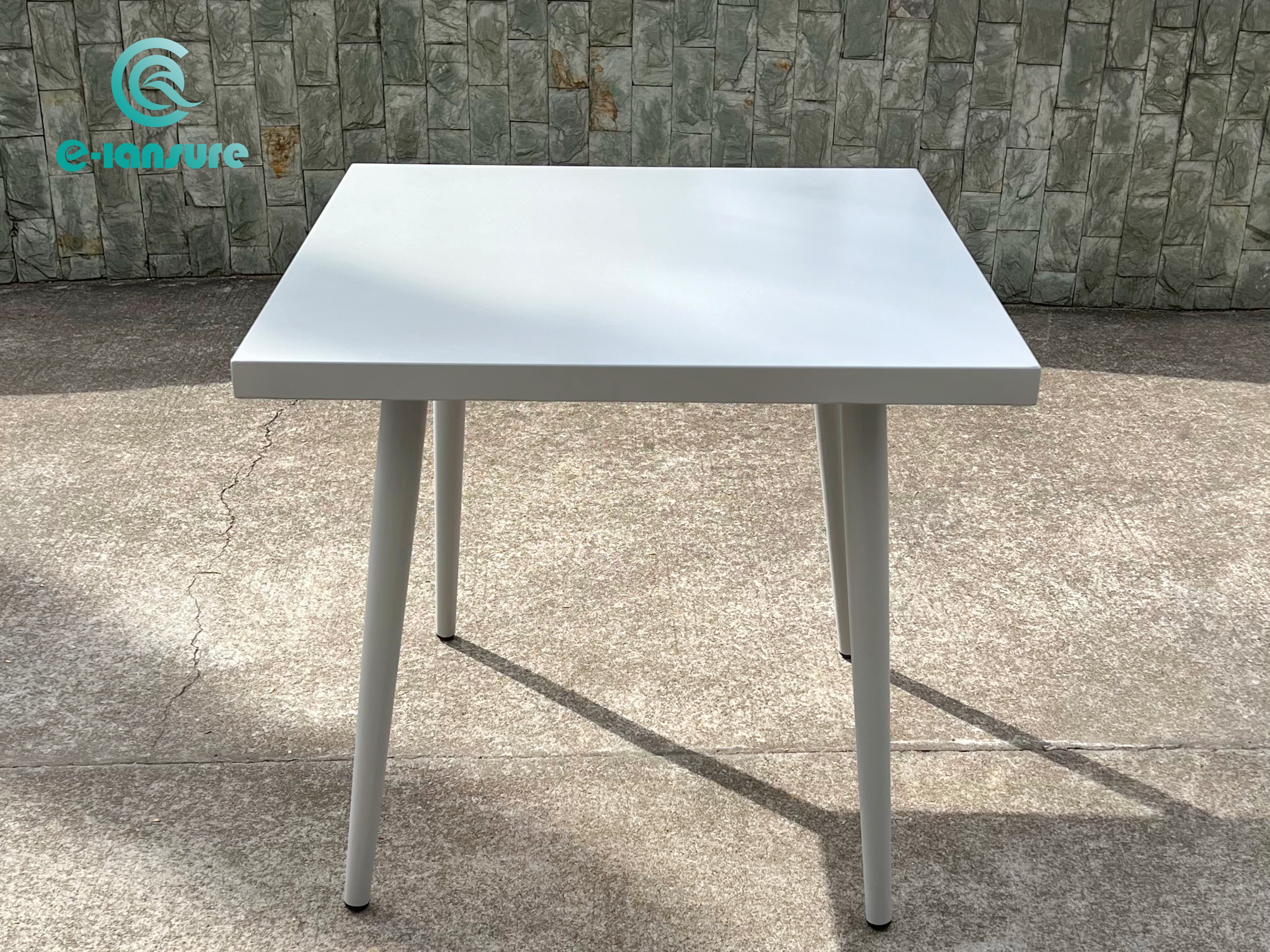
Hidden operational costs drain profit margins in outdoor dining spaces. Labor hours spent cleaning, treating, and repairing tables add up fast. Operators often prioritize the aesthetic appeal of a commercial outdoor table, ignoring the harsh realities of daily use. High customer turnover, acidic food spills, and rigorous sanitization destroy weak surfaces. Environmental stressors accelerate this degradation. UV exposure fades pigments. High humidity breeds mold. Salt air corrodes metal. Freeze-thaw cycles crack porous materials. Residential-grade furniture fails rapidly under these conditions, leaving you with loose joints and rust stains on your patio pavers. To stop this revenue leak, you need a strict evaluation framework. You must assess tables based on material science, structural engineering, and strategic placement. Upfront purchase price matters less than minimizing daily friction. True value comes from eliminating intensive upkeep and keeping your patio at full capacity.
Key Takeaways
Material dictates maintenance: Non-porous, weather-resistant materials like High-Pressure Laminate (HPL) and powder-coated aluminum require significantly less daily upkeep than traditional wood or bare metal.
Design prevents degradation: Tables engineered with proper drainage, seamless edges, and marine-grade stainless steel fasteners eliminate common points of failure like rust and mold accumulation.
Environment determines selection: The definition of "low maintenance" shifts based on regional climate (e.g., UV resistance in the Sunbelt, mold mitigation in high-humidity zones, rust prevention in coastal areas).
Supplier vetting is critical: A reliable outdoor furniture supplier provides commercial-grade warranties and accessible replacement parts, mitigating long-term replacement costs.
The Operational Cost of High-Maintenance Restaurant Outdoor Furniture
Patio maintenance demands constant manual labor. Staff members spend valuable time every morning prepping the outdoor dining area. They wipe away morning dew, scrub off bird droppings, and remove sticky residue from the night before. When you multiply these daily tasks across dozens of tables, the labor drain becomes massive. High-maintenance materials demand even more attention. Wood requires seasonal sanding and oiling. Steel requires regular rust inspection and touch-up painting. This diverts your staff from their primary goal of serving guests and turning tables.
Peak season demands rapid table turns. During a busy lunch rush, staff must sanitize surfaces in seconds. Your restaurant outdoor furniture must withstand harsh chemical cleaners without degrading. Inferior materials absorb spills. They hold onto grease. They require aggressive scrubbing that slows down service. Off-season upkeep presents a different challenge entirely. When the weather turns cold, high-maintenance tables need protective coatings. Staff must apply rust inhibitors or heavy tarps. Sometimes, the furniture must be moved entirely indoors. This requires heavy lifting, dedicated storage space, and risks employee injury.
Maintenance directly impacts your revenue capacity. Taking a table out of service for repair during peak hours hurts your bottom line. A wobbly base or a splintering top makes a table unusable. Guests refuse to sit at damaged tables. Spilled drinks lead to comped meals and frustrated customers. When a table requires mid-shift tightening or emergency cleaning, you lose valuable seating time. Reliable, low-maintenance furniture keeps your patio at full capacity. It ensures every seat generates revenue throughout the entire shift.
Let's look at the specific labor hours wasted on poor furniture choices. A standard 50-table patio using high-maintenance wood or steel can easily consume 15 hours of extra labor per week just in specialized cleaning and minor repairs. Over a 30-week patio season, that equals 450 hours of wasted payroll. You pay staff to sand, paint, and tighten bolts instead of running food and upselling drinks. The operational drag is severe.
Material Science: Evaluating Surface Durability and Upkeep
The surface material of your tables dictates your daily maintenance routine. Some materials wipe clean instantly. Others require specialized chemicals and intense scrubbing. Understanding material science helps you choose the right surface for your operational capacity.
High-Pressure Laminate (HPL)
High-Pressure Laminate is engineered for severe commercial environments. Manufacturers create it by saturating kraft paper with phenolic resin. They bake it under extreme heat and pressure. This process creates a dense, solid core. An HPL outdoor table offers exceptional scratch resistance. The non-porous surface blocks moisture penetration. It resists acidic food stains, grease, and red wine spills.
The maintenance reality is highly favorable. Staff only need mild soap and water for daily cleaning. HPL withstands thermal shock. You can place hot plates directly on the surface without leaving burn marks. It also resists UV fading. You never need to apply aftermarket protective coatings. However, there is a trade-off. The manufacturer must seal the edges perfectly. If the edge profile is compromised, moisture can enter the core and cause swelling. Always inspect the edge banding quality before purchasing.
To maintain HPL properly, follow these simple steps:
Wipe away loose debris with a dry cloth.
Spray the surface with a mild, non-abrasive commercial sanitizer.
Wipe clean with a microfiber towel to prevent streaking.
Allow the surface to air dry completely before seating the next guest.
Powder-Coated Aluminum
Aluminum provides excellent structural strength without excessive weight. It possesses inherent rust resistance. Unlike steel, aluminum does not oxidize destructively when exposed to moisture. Manufacturers apply a dry powder coating to the surface. They cure it under heat to form a hard, protective skin. This finish resists chipping and scratching better than traditional wet paint.
Daily upkeep is minimal. Staff can wipe down powder-coated aluminum quickly with standard sanitizers. The smooth surface does not trap dirt. Operators must perform periodic inspections. Deep gouges that penetrate the powder coating expose the raw aluminum. While it won't rust, it can corrode slightly over time. Another trade-off involves heat retention. Dark-colored aluminum conducts heat rapidly in direct sunlight. This makes the surface uncomfortably hot for guests. Selecting lighter colors mitigates this issue.
Commercial-Grade Resin and Recycled Plastic
Commercial resin and high-density polyethylene (HDPE) excel in wet environments. These materials are entirely impervious to moisture. They never rot, splinter, or harbor marine borers. They perform exceptionally well in coastal areas and humid climates.
Resin tables require very low maintenance. They ignore rain and salt spray. You must use specific non-abrasive cleaners. Harsh scouring pads will dull the plastic finish. Over time, a dulled surface traps micro-dirt and looks permanently dirty. Some lower-quality resins require occasional UV protectant sprays to prevent chalking. High-quality HDPE usually includes UV inhibitors mixed directly into the polymer. Keep in mind that resin is heavier than aluminum. Lower-quality plastics can also warp under extreme, sustained heat.
Wood and Coated Steel (The High-Maintenance Baselines)
Wood and steel offer classic aesthetic appeal. They provide heavy weight, which helps resist strong winds. Many operators love the look of natural teak or wrought iron. These materials represent the high-maintenance baseline in commercial settings.
Wood requires relentless upkeep. Staff must sand the surface to remove stains. They must apply oil or varnish seasonally to prevent graying and cracking. Wood absorbs food grease if the sealant fails. Steel requires vigilant rust mitigation. Even a tiny scratch allows moisture to reach the raw steel. Rust forms quickly and spreads under the paint. Staff must wire-brush the rust, apply primer, and touch up the paint frequently. These materials carry the highest labor requirements. They are rarely recommended for high-turnover spaces seeking low maintenance.
Material
Daily Cleaning Effort
Seasonal Maintenance
Weather Resistance
Ideal Climate
HPL
Low (Soap & water)
None
High (UV & Moisture resistant)
All climates
Powder-Coated Aluminum
Low (Standard sanitizers)
Inspect for deep scratches
High (Rust-proof)
Coastal, High Heat (if light colored)
Commercial Resin
Low (Non-abrasive cleaners)
Occasional UV protectant
High (Impervious to rot)
Humid, Coastal
Wood (Teak/Oak)
Medium (Specialized wood cleaners)
High (Sanding, oiling, sealing)
Medium (Prone to weathering)
Mild, Covered patios
Coated Steel
Medium (Careful wiping)
High (Rust removal, repainting)
Low (Prone to rapid oxidation)
Dry, Arid climates
Engineering and Structural Features That Minimize Maintenance
Material choice is only half the equation. The physical design of an outdoor table heavily influences how much maintenance it requires. Poor engineering creates traps for water, dirt, and bacteria. Smart engineering sheds water and resists structural fatigue.
Drainage and Water Mitigation
Water is the enemy of outdoor furniture. When water pools on a flat surface, it leaves hard water stains as it evaporates. It also breeds mold and mildew. Slatted table designs allow rainwater to fall straight through. This eliminates pooling entirely. If you prefer a solid top, ensure the table has a slight, imperceptible crown or drainage channels. Preventing standing water drastically reduces the time staff spends wiping tables after a rainstorm. It also prevents moisture from seeping into microscopic surface cracks.
Fastener Integrity
The hardware holding the table together is often the first point of failure. Cheap zinc-plated screws rust rapidly outdoors. Once a screw rusts, it expands. This expansion cracks the surrounding material. The rust also drips down, staining the table base and the patio floor. Always demand marine-grade stainless steel hardware. Grade 304 or 316 stainless steel resists corrosion even in harsh environments. High-quality fasteners keep joints tight. They prevent the table from becoming loose and wobbly over time. When a zinc-plated screw fails, the entire joint loses structural integrity. The table wobbles, and guests notice immediately. Upgrading to 316 stainless steel hardware adds negligible cost upfront but saves hundreds of dollars in replacement labor over a five-year cycle.
Reinforced Bases and Floor Glides
The table base endures constant kicking, scuffing, and mop water exposure. Bases reinforced with aluminum strike the perfect balance. They offer enough weight for stability but remain entirely rust-resistant. Cast iron bases are heavy but rust quickly if the powder coating chips. Floor glides are equally critical. Missing or broken glides cause immediate table wobble. A wobbly table spills drinks and angers guests. Staff waste time wedging napkins under the legs. Self-leveling or heavy-duty adjustable glides solve this problem permanently. They also protect your expensive patio pavers from deep scratches and permanent rust rings.
Weight vs. Mobility
Operators face a constant battle regarding table weight. A table must be heavy enough to stay upright during severe wind gusts. High-rise rooftop bars experience intense wind loads. The table must also be light enough for staff to move. Staff need to push tables together for large parties. They need to move them daily to sweep and power-wash the patio deck. If tables are too heavy, staff risk injury. They might drag the tables instead of lifting them, which destroys the floor glides and damages the base. Aluminum frames paired with HPL tops often provide the ideal weight-to-mobility ratio. Consider the daily workflow of your closing staff. They must stack chairs, move tables, and operate heavy floor scrubbers. A table weighing 80 pounds requires two people to move safely. A 40-pound aluminum table requires only one person. This cuts your patio breakdown time in half.
Strategic Placement and Layout
Where you place the furniture impacts how often you clean it. Tables positioned directly under trees accumulate sap, leaves, and bird droppings rapidly. Tables placed in direct, unshaded sunlight suffer faster UV degradation. Strategic layout reduces maintenance. Utilize awnings, umbrellas, and pergolas to shield tables from direct rain and midday sun. Ensure adequate spacing between tables. Staff need room to maneuver power washers and floor scrubbers during deep cleaning sessions. Tight layouts lead to bruised furniture as chairs constantly bang into table edges.
Environmental Stressors: Aligning Table Choice with Climate Realities
A low-maintenance table in Arizona might fail miserably in Florida. Regional climate dictates the specific environmental stressors your furniture will face. You must align your material selection with your local weather patterns.
Coastal Environments
Salt air is highly corrosive. It penetrates micro-abrasions in paint and attacks the metal underneath. Coastal operators must focus entirely on corrosion resistance. Standard steel is a massive liability near the ocean. Even galvanized steel eventually succumbs to salt spray. Aluminum, commercial resin, and HPL are the only viable options. These materials ignore salt accumulation. Staff only need to hose them down periodically to remove the sticky salt residue.
High UV and Extreme Heat Zones
Sunbelt locations face intense solar radiation. UV rays break down polymer chains in plastics, causing them to turn chalky and brittle. UV also fades dark colors rapidly. In these zones, operators need UV-stabilized resins. If choosing HPL, select lighter colors or patterns that hide slight fading. Heat retention is another major issue. Dark metal tables absorb heat and can burn guests. Light-colored powder coatings or non-heat-conducting materials like resin and HPL keep surfaces comfortable during afternoon service.
High Humidity Zones
Humid climates breed mold, mildew, and algae. Porous materials absorb moisture from the air, creating a perfect breeding ground for spores. Wood tables turn green with algae quickly in the South. Operators in humid zones must demand non-porous surfaces. HPL and sealed aluminum block moisture entirely. Slatted designs are also crucial here. They promote maximum airflow, allowing the furniture to dry rapidly after heavy afternoon thunderstorms. Algae growth creates a slip hazard and a massive sanitation issue. Health inspectors routinely flag porous wood tables in humid environments because they cannot be properly sanitized. Non-porous surfaces eliminate this compliance risk entirely.
Freeze-Thaw Cycles
Northern climates experience brutal freeze-thaw cycles. Water seeps into tiny cracks during the day. At night, the temperature drops, and the water freezes. Water expands by about nine percent when it turns to ice. This expansion exerts massive pressure, shattering porous materials from the inside out. Wood splits. Cheap plastics crack. Concrete tops crumble. In freezing zones, non-porous materials are non-negotiable. HPL and heavy-duty aluminum withstand these thermal shocks without structural damage.
Vetting Your Outdoor Furniture Supplier for Long-Term Value
The company you buy from is just as important as the table itself. A reputable outdoor furniture supplier stands behind their product. They understand the specific demands of the hospitality industry. Vetting your supplier prevents massive headaches down the road.
Commercial vs. Residential Warranties
Never assume a warranty covers your restaurant. Residential warranties explicitly void coverage if the product is used in a commercial setting. You must read the fine print. A true commercial warranty covers high-traffic use. It accounts for daily cleaning chemicals and constant movement. Look for warranties that specifically cover structural frame failure and surface delamination. Understand the exclusions. Most warranties exclude acts of nature like hurricane damage, but they should absolutely cover normal environmental wear and tear.
Availability of Replacement Parts
Commercial furniture takes a beating. Eventually, a component will break. A forklift might back into a table base. A guest might snap off a floor glide. If your supplier does not offer replacement parts, you have to throw away the entire table. Reliable suppliers stock individual replacement glides, hardware kits, table bases, and individual tops. Buying a five-dollar replacement glide saves you from buying a two-hundred-dollar table base. Always ask the supplier for their parts catalog before making a bulk purchase.
Compliance and Safety
Commercial spaces carry high liability. If a table collapses and injures a guest, the restaurant faces severe legal consequences. Ensure your supplier meets recognized commercial safety standards. Look for BIFMA testing certifications. BIFMA tests furniture for stability, weight capacity, and structural endurance. Furniture that passes these rigorous drop tests and load tests guarantees structural longevity. It provides peace of mind for your operations team.
Conclusion
Take the following steps to upgrade your outdoor dining space and reduce maintenance labor:
Audit your current patio maintenance routine to calculate exact weekly labor hours spent on cleaning and repairs.
Request physical material samples from a reputable supplier to test against your standard chemical sanitizers.
Review the specific commercial warranty terms and replacement part availability before finalizing any procurement order.
Assess your patio layout to ensure adequate spacing for efficient power washing and daily floor maintenance.
Replace high-maintenance wood or steel units with an outdoor dining table made of HPL or powder-coated aluminum to immediately cut daily upkeep.
FAQ
Q: What is the most weather-resistant material for a commercial outdoor table?
A: High-Pressure Laminate (HPL), powder-coated aluminum, and high-density resin are the top performers. They easily withstand heavy rain, intense UV exposure, and rapid temperature fluctuations without rotting, rusting, or fading.
Q: How do you clean an HPL outdoor table?
A: Use a mixture of mild dish soap and warm water. Wipe the surface with a soft microfiber cloth. Avoid abrasive scrubbers or harsh bleaching agents, as they are unnecessary and can dull the finish over time.
Q: Do I need to apply protective coatings to my outdoor dining table?
A: It depends on the material. Wood and lower-grade plastics require seasonal sealants or UV protectants. Commercial-grade materials like HPL and powder-coated aluminum are engineered to bypass this step entirely.
Q: Why do commercial outdoor tables cost more than residential ones?
A: Commercial tables feature thicker metal gauges, UV-stabilized polymers, and marine-grade hardware. They are engineered to survive high-turnover daily use and come with specialized warranties that residential furniture lacks.
Q: How can I prevent my restaurant outdoor furniture from rusting?
A: Choose aluminum frames over steel. Ensure all powder coatings remain intact and scratch-free. Most importantly, verify that every screw, bolt, and washer used in assembly is made of marine-grade stainless steel.
Q: Are wood tables practical for a high-volume outdoor dining area?
A: Generally, no. Wood requires high maintenance, including frequent sanding, sealing, and mold removal. For high-volume spaces, faux-wood resin or wood-grain HPL alternatives provide the same aesthetic with significantly lower upkeep.
Q: How often should commercial outdoor furniture be replaced?
A: High-quality commercial-grade furniture typically lasts 5 to 10 years depending on the climate and usage volume. Choosing low-maintenance, weather-resistant materials extends this lifespan significantly by preventing premature structural failure.
Foshan Yiran Furniture Co.,Ltd. which is located in Foshan Guangdong. It’s a traditional outdoor furniture factory integrating development, design, manufacture and sales.